Posts

Saint Romero of the Americas

Image
In honor of the canonization of Archbishop Oscar Romero as a recognized Saint in the Roman Catholic faith, I would like to share a few photos from my collection.  Romero's words, actions and faith inspire Christians and advocates of social justice across boundaries of country, culture and denomination.  Our very first visit with our Lutheran sister church in El Salvador.  Note the poster of Archbishop Romero on the front wall.  The community is named Heroes in the Faith.  The first street in the community is named for Monseñor Romero. A simple painting of Romero in a community named for Rutilio Grande Lutheran women from a small rural community visiting Romero's home Rutilio Grande poster, Fernando Llort boxes, "Flat Martin" (Martin Luther) in a handmade clay cup commemorating the 500th anniversary of the Reformation, and a Romero candle. Can you identify these 4 men? Palm Sunday 2018 at our Lutheran Church in El Salvador - Don't kill Pr...
Tales of The Grandfather: God Sends Angels

It was during the war.  The Grandfather had been detained several times by the military, but thankfully he had always been released.  The military conducted their operations in the zone, and The Grandfather conducted his operations as well.  His work was the work of the church - to accompany the people and defend their human rights. One day, The Grandfather went to a small town to check on his people.  A military squad had arrived early, while it was still dark.  The soldiers conducted their "operation" of knocking on doors, pulling people out of their homes, rummaging through people's belongings, tossing belongings into the street, and supposedly looking for weapons.  It was "pure harassment," according to The Grandfather.  When The Grandfather arrived, soldiers detained him at the edge of town.  The Grandfather tried to convince the soldiers that he had a right to be with the people because he was their pastor.  The soldiers refused to ...

Just Click: Flags of September Give Way to Winds of October

Image
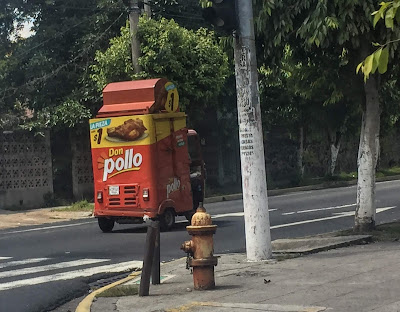
There were many sights this past month that did not get captured for posterity.  The reality is that sometimes it is a little too dangerous to pull out a phone to snap a pic.  More often, however, it simply seems too rude to take a photo.  I frequently identify something as odd or funny or extraordinary because it is culturally different from things I identify as "normal" in my native country.  And, there are plenty of times when something stands out as photo-worthy to me and my Salvadoran friends as we travel the roads together... These little chicken trucks have suddenly appeared on the streets of San Salvador.  The box part is built on the back of one of those 3-wheel taxis.  When it turns a corner it looks like it will just topple over. The bridge on the longitudinal highway is still under construction, a year after a flash flood wiped it out.  So, that means... You have to drive on a dirt path through the river, unless it's raining....

Creativity, Technology, Opportunity and Alligators

Image
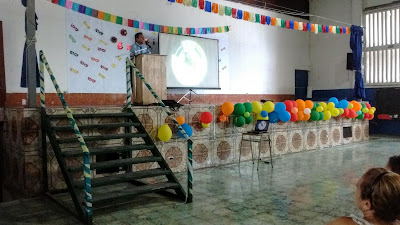
As the school year begins in the US, students in El Salvador are into their last 6 weeks of classes.  September brings a focus on history and patriotism.  October is the month of the child.  November is graduation month.  For older students, these last months of school are filled with many special celebrations which makes it even more challenging to complete group projects, present graduation projects and theses, pass examinations and secure good evaluations. The parades and cultural events are super fun.  The students are nervous but love seeing the photos of themselves and their friends in costumes, dancing, making music and marching.  Sometimes I am frustrated by the amount of time these events take away from coursework (at all levels).  As a former teacher, for me, it is a greater honor to receive an invitation to share in special, end-of-school-year scholastic events with Salvadoran families.  Proud parents are truly joyful when guests fro...

Ecumenical Women for Peace

Image
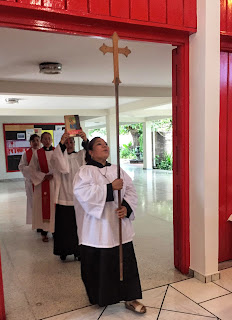
I was once at a conference during which Sister Joan Chittister made a statement which I remember as:  if women were in charge of war, the tank would be followed by the milk truck.  Sister Joan's point was that women think differently than men.  Earlier this week, my husband and I participated in a worship service dedicated to the upcoming sanctification of Beato Monseñor Oscar Romero.  The worship was led by women.  Ecumenical Women for Peace is a grass roots group of female religious leaders in El Salvador.  The group formed a few years ago during a peace conference and the women continue to gather in support of one another, to share Bible Study and to praise God together.   They meet in each other's houses of worship, taking turns preaching and presiding. The Anglican Church hosted the latest worship.  My husband received the invitation through the election observer network.  I received it from the leader of the women's gr...

Way Off the Beaten Path: The Fishpond of the Wife of Mr. Napo

Image
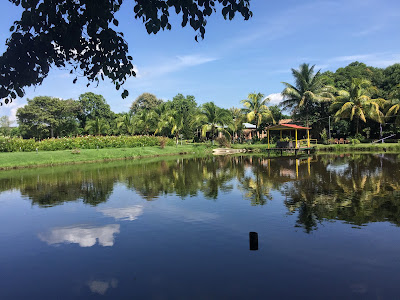
Are you already laughing at the title?  The English translation of the name of this little gem of a place is not as beautiful as the name in Spanish:  Pecera La Teca de Don Napo.   Naturally, there is a story about the name.  This somewhat remote property in Chalatenango is the family home of Napoleon, his beloved wife (who he affectionately called "Teca"), and their children. One member of the younger generation is a trained chef, and it was his family's idea to rekindle the spirit of the place in which families can spend time together.  In the middle of the compound you can see the original adobe home and a framed photo of don Napo.  Surrounding the home you will find a first class restaurant, two tilapia ponds, gardens, a resting pier on one of the ponds and a playground for children -- a peaceful retreat where guests can enjoy a little bit of nature and delicious food.  We went for lunch on a Thursday with a friend and her son. ...

Testing the Water

Image
Don't drink the water.  Don't brush your teeth with the water.  Don't open your mouth in the shower. Perhaps you have been in El Salvador and received these cautions.  Perhaps you have learned that Salvadorans suffer the effects from living in a region in which nearly 100% of the surface water is contaminated with human and animal feces and agro and industrial chemicals.  Perhaps you have experienced a day or more in El Salvador during which the municipal system did not function, and you had no access to water.  Added to the environmental and systemic issues, the interests of private companies which sell water in plastic bottles or use water to make bottled beverages (Coca-Cola) have made it nearly impossible for El Salvador to make progress in cleaning up its water mess. The fight to pass a holistic water protection bill continues, as do the negative effects contaminated water have on the health of the Salvadoran people.  In the midst of the struggle, ...