Posts

Legend: The Origin of the Corn
Image
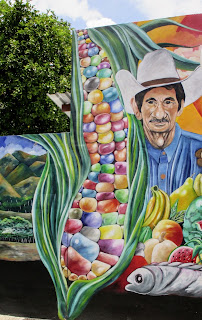
This story is told in the region of Tonacatepeque, El Salvador.  It comes from the time before the land which is now El Salvador was colonized by Europeans and is drawn from a combination of cultures and sources. The first American people had been created and formed some time ago.  They wandered in the forests of their chieftains, gathering their foods from the plains among the hills. They fed themselves with roots, fruits, stalks and tender buds, which were pleasing to the palate.  However, this alone was not enough to feed everyone, so Ometecuhtli (God of Life) thought he should create something that could sustain the people.  He ordered Tonacatecuhtli (God of Sustenance, at the center of all things) to give the people the means to find a new food. So, Tonacatecuhtli materialized and took the form of a priest.  He began to preach to the people the about the creation of a new type of food that would sustain them.  The people gathered very close to th...

Linda's El Salvador Blog Gets a New Name

Dear Readers, Linda's El Salvador Blog has a new name:  Walking With El Salvador.    It was time for a bit of an update with the format, and with a few things on the technical end of the blog, and the time seemed right to give the blog a name which is a bit more formal.  The new name also reflects the way in which we work and live and learn together, as friends and members of sister churches who come from different cultures and different places.  We walk together.  We accompany one another.  And we sure do have some amazing experiences along the way. There are many stories yet to be written.  Some are tucked into journals from the early years.  Some are pretty fresh.  Some have not yet been imagined. Let's keep walking, reading, writing and learning together. Linda

Thanks to the Quilting Ladies

Image
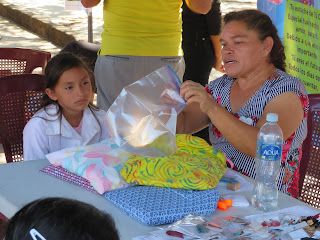
My last story was about the sewing collective which makes Days for Girls kits in El Salvador.  Many of the women in the US who sew Days for Girls kits also sew quilts for Lutheran World Relief, create baby items for Newborn Kits and use their sewing skills for a variety of ministries in the church.  Fabric closets in Lutheran Church basements are filled with generous donations, and in our church network, some of those end up in El Salvador.  This isn't my first story about giving away fabric in our Salvadoran sister church, nor will it likely by my last, because this is one topic that people ask me about fairly frequently. How to do a Raffle: Step 1:  Befriend the quilting ladies or at least send out the word to the quilting group that any fabric not suitable for quilting is welcomed in the El Salvador donation bin. Step 2:  Sort out the wool and heavy fabrics which are not useful in El Salvador.  Sort out the too-small scraps and anything deemed not ...

Women's Collective for the Win!

Image
The challenges of running a small business dedicated to the production and sale of Days for Girls washable menstrual hygiene kits for girls and women are many.  The commitment to providing women and girls with accurate information about their own changing bodies and the rights they have to protect and care for their bodies is taken very seriously.  The goal of placing kits into the hands of girls, youth and women who need them is being met. This is an update on a story that began in 2016 - a story about commitment, perseverance, teamwork, inspiration and adaptation. Sonia teaches girls how to care for their Days for Girls kits during the 2019 Mission of Healing Family Wellness Fair. By 2021, plastic bags will be eliminated from kits produced in the US and in El Salvador. Background Within the Days for Girls International framework, a model is provided for setting up small, local enterprises within impoverished communities as a means of both employing women and s...

What Happens if the Beach Turns into Plastic?

Image
Beaches in El Salvador have a pretty good reputation for being trashy.  Certainly 20 years ago, beach-goers routinely tossed their trash into the water or left anything that was not going home right there on the sand.  After any holiday, The warm black sand was literally covered with paper napkins, styrofoam plates, plastic forks, straws, plastic bags, and all kinds of picnic garbage.  Roaming dogs ate the food scraps.  Stuff worth selling was picked up by scrappers and recyclers.  And people relied on the waves to wash the bulk of the trash out to sea. And while trashing the beach while at the beach was bad enough, tossing stuff out of bus windows, sweeping home trash into the streets, tossing rural trash into water ways was simply what Salvadorans did.  The challenge was real, and still is:  small country, big population, an abundance of trash. Over the last 20 years, environmental education combined with infrastructure improvements have made a ...

Loving Our Neighbor

Image
One day before, the church was dedicated and recognized as Resurrection Lutheran Cathedral - a new name for a new building for an historic church. August 5th was a day of celebrations and ordinations.  On this day, August 6th, the church continued tradition of honoring the anniversary of the consecration of Bishop Medardo Gómez as Bishop of the Salvadoran Lutheran Church with a march through the streets of San Salvador.  The street in front of Resurrection was barricaded, a stage had been erected, white canopies stood ready to shade hundreds of guests seated in hundreds of white plastic chairs, papel picado  fluttered in the breeze, and vendors stood ready to sell snow cones and homemade frozen things on sticks.  As the sun rose high in the sky, about a thousand hot and sweaty marchers, wearing pastoral regalia, community t-shirts, floppy hats and tennis shoes, and carrying banners, umbrellas, sleepy toddlers and cardboard crosses on sticks, made their way into the a...

Little Marchers for Independence Day

Image
Blue and white.  September is the month of blue and white - from balloon arches and tissue paper streamers to little flags fluttering from car windows, El Salvador's national colors paint the month of September. In small towns and municipalities, Independence Day celebrations are led by school administrators, teachers and band directors.  Parades and fiestas pop up throughout the month, but the big day is September 15th.  Streets are blocked off, big stages with giant speakers are set up in front of mayor's offices, Ministry of Education officials prepare their speeches, and little children practice the pledge to the flag. This year, I marched with our community family circle (like a preschool for parents and kids from age 0 to 4).  The littlest marchers in Salvadoran Independence Day parades dress is costumes that reflect their future career choices.  They walk beside their moms or dads, and usually end up being carried for a good portion of the par...